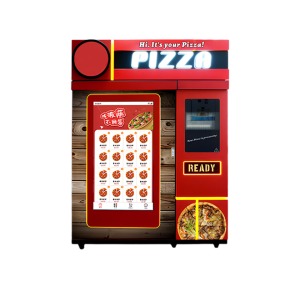
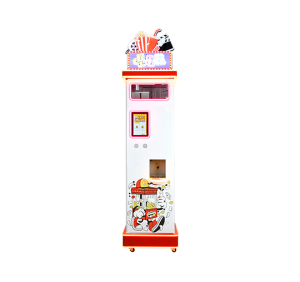
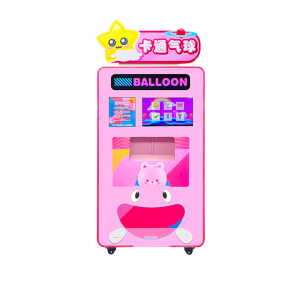
Robotic ice cream vending machines are winning in malls and amusement parks because they solve three problems at once: they cut labor to zero, they serve customers in under 90 seconds, and the robotic arm itself becomes a free attraction that pulls crowds. For venue operators chasing higher revenue per square meter without adding staff, that combination is hard to beat. Below is a breakdown of what makes these machines so effective in entertainment-driven locations — and where the real ROI comes from.
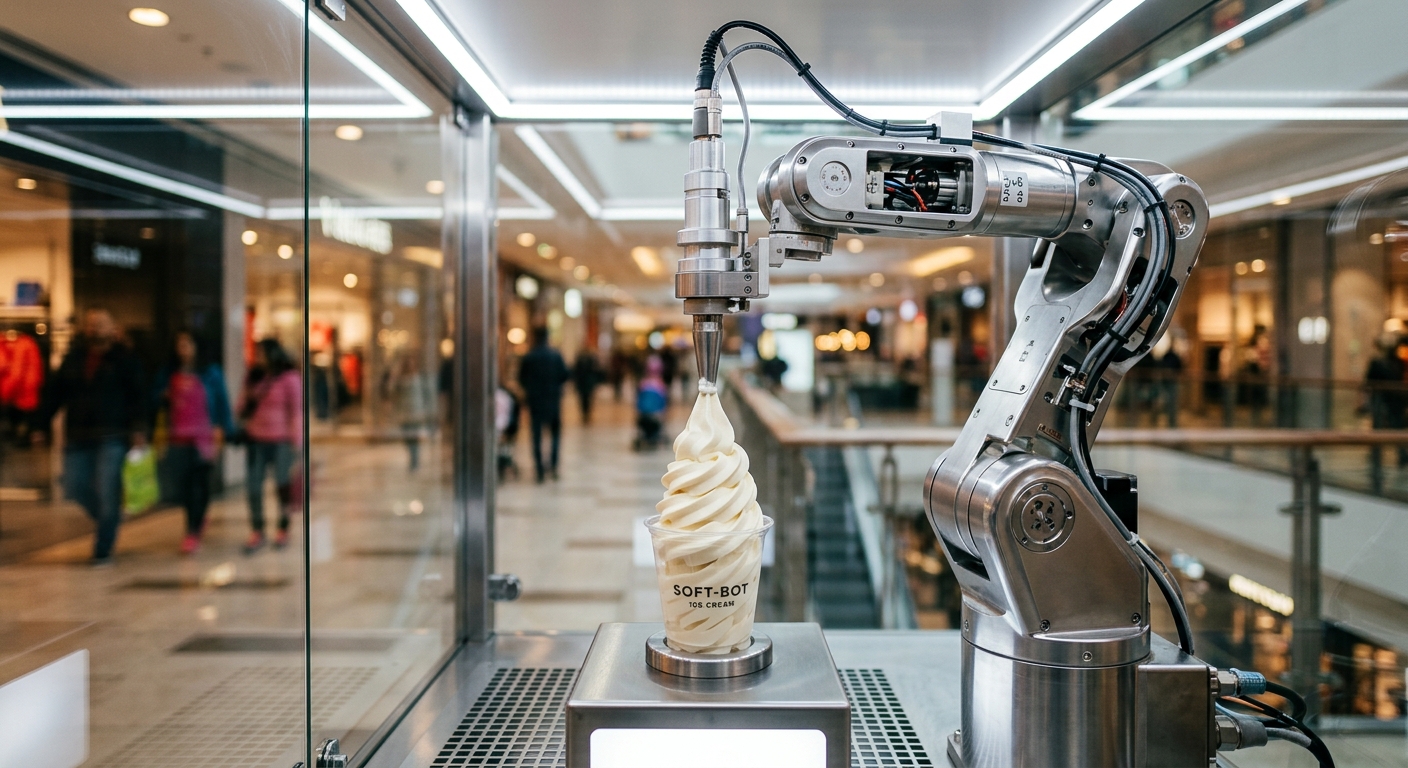
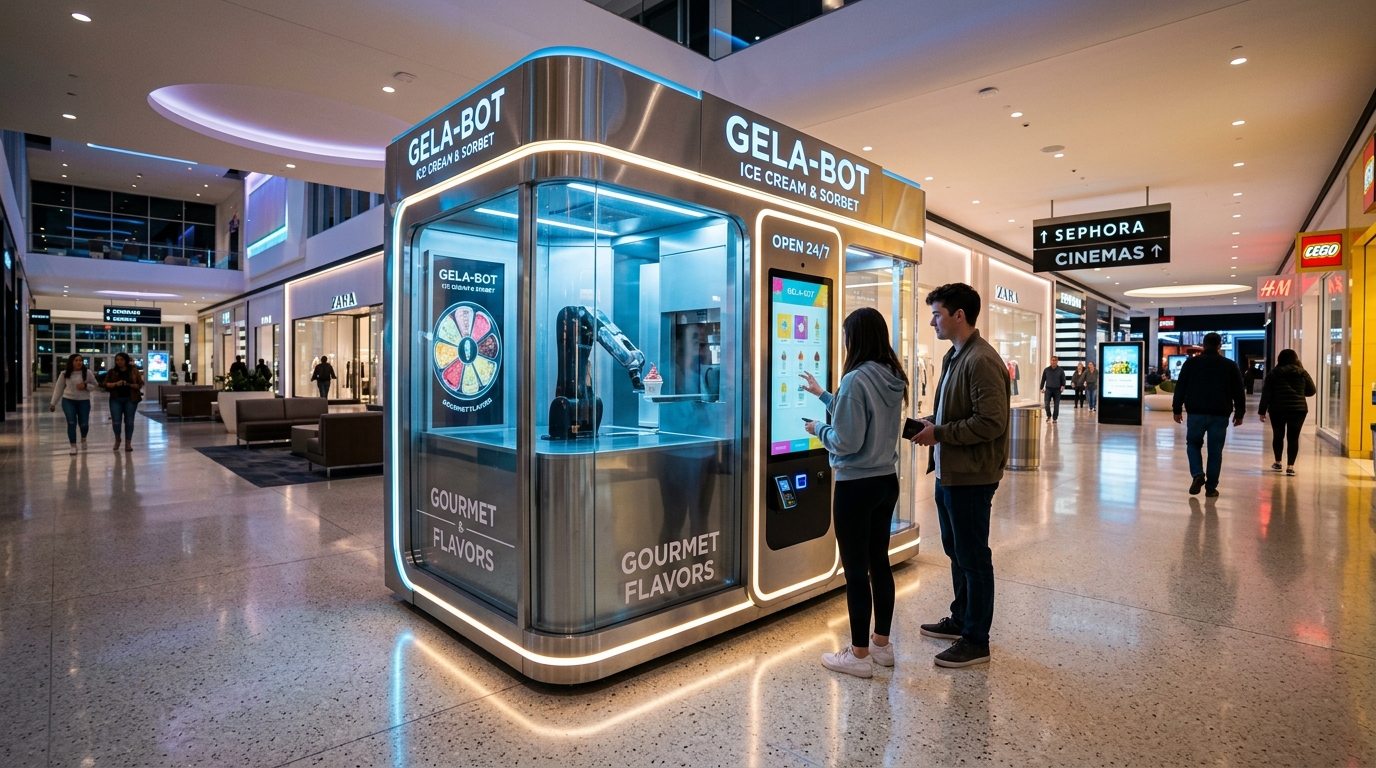
Walk past a robotic ice cream machine in any busy mall and you’ll see the same thing — phones out, kids pointing, parents queuing. The product is good, sure. But what stops people is the robotic arm executing a perfect swirl in 30 seconds.
This matters more than most buyers realize. A traditional ice cream counter has to compete on flavor and price. A robotic kiosk competes on spectacle, and spectacle converts walk-by traffic into paying customers at a much higher rate. Internal data from operators we work with suggests robotic kiosks in mall atriums see conversion rates of 8–15% of foot traffic during peak hours, compared to 2–4% for static dessert counters.
For instance, a mid-sized shopping center in Southeast Asia placed a robotic ice cream unit near a children’s play zone. Within two weeks, the machine became a destination in itself — parents brought kids specifically to watch the robot “perform.” The ice cream was almost incidental.
Here’s the part that gets investors interested. A traditional scoop shop in a mall typically needs 2–3 staff per shift, with two shifts a day. At even modest wages, that’s a fixed monthly cost of several thousand dollars before you sell a single cone.
A robotic ice cream vending machine runs on its own. Restocking takes one technician about 20–30 minutes, two or three times a week depending on volume. That’s it. The machine works during peak mall hours, after closing for late cinema crowds, and on holidays when staffing is most expensive.
If you want to dig deeper into where unattended machines earn the most, our guide to top profitable vending machine locations breaks it down by venue type.
Mall leasing managers care about one metric above all others: revenue per square meter. This is where robotic ice cream machines quietly dominate.
A typical robotic ice cream kiosk occupies 1.5–3 m². A scoop counter with prep area, freezer storage, customer queue space, and staff zone needs 8–15 m². Even if both generate the same daily revenue, the robotic unit is delivering 3–5x the revenue per square meter — and paying a fraction of the rent.
This is why amusement park operators are placing them in spots that were previously dead space: under staircases, in walkway widenings, near restroom corridors, beside ride exits. Locations that couldn’t justify a full F&B build-out suddenly produce meaningful revenue.
Post-2020, hygiene perception drives purchase decisions more than operators want to admit. Robotic vending machines have a structural advantage here — the entire dispensing process happens inside a sealed glass enclosure. No human hands touch the cup, the spoon, or the ice cream.
Beyond perception, there’s real consistency. Every swirl is identical. Portion control is exact, which means food cost stays predictable. No more “heavy-handed staff member” eating into your margins by over-portioning. A good machine doses within ±2 grams per serving.
For operators in school zones, hospitals, or family entertainment centers — places where parents scrutinize hygiene — this closed-loop design is a genuine selling point, not just a marketing line. We’ve covered the engineering side of this in our ice cream vending machine master guide.
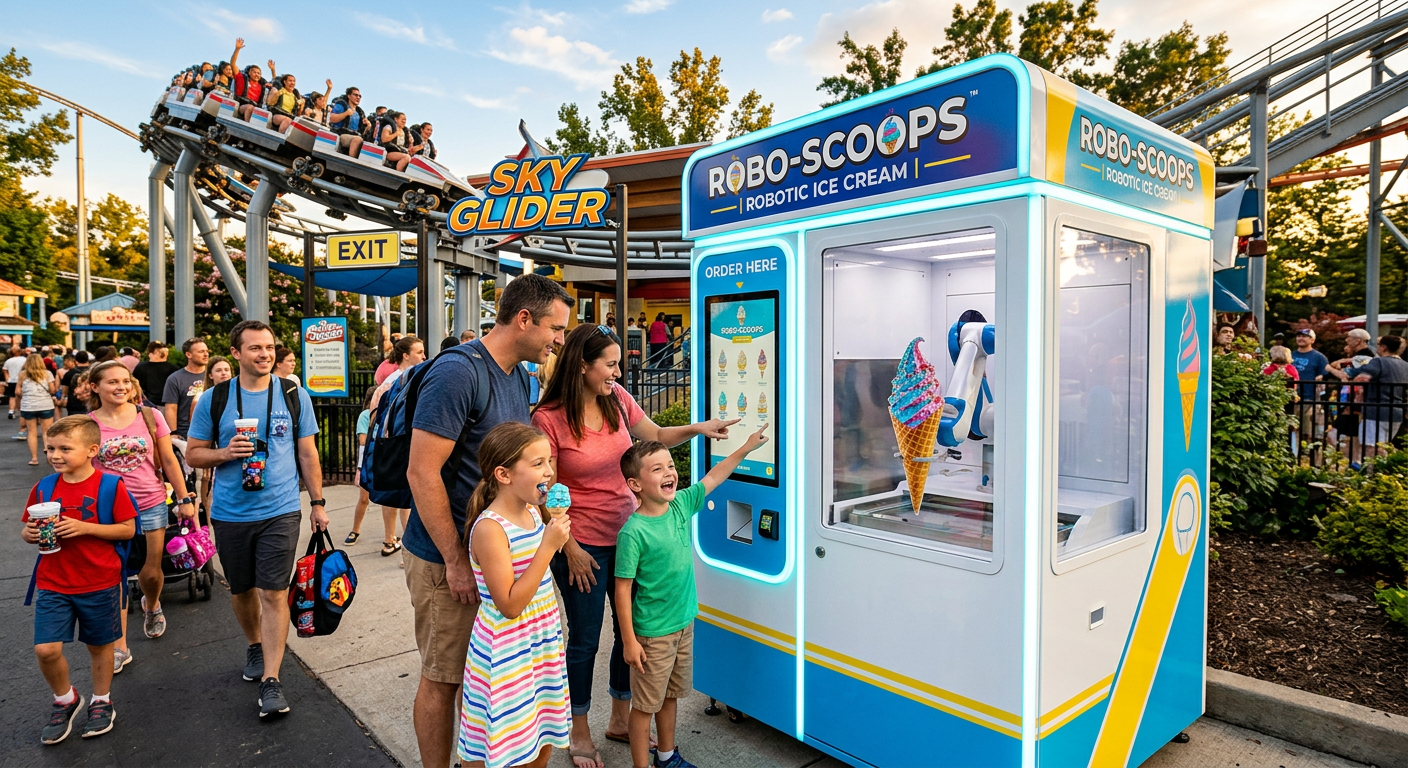
Amusement parks have a problem most mall operators don’t: massive demand spikes followed by long quiet periods. A single ride empties 30 hungry guests at once, then nothing for ten minutes. Staffing for the peak means paying for the trough.
Robotic machines handle this perfectly. They don’t get overwhelmed by a queue of 15 — they just keep working at 60–90 seconds per cup. And during the slow periods, you’re not paying anyone to stand around.
A regional theme park in the Middle East installed three robotic ice cream units at ride exits last summer. They reported a 40% increase in dessert sales versus the previous season’s manual carts, with significantly fewer customer complaints about wait times. The kicker: the units kept running during a heatwave that forced manual concession stands to reduce hours due to staff fatigue.
Most buyers focus on the machine specs and forget the cabinet itself is a 2-meter-tall billboard. Wraps, screen content, lighting color, and even the robot arm’s movement pattern can be customized. For mall operators running multiple food brands, this means a single hardware platform can support seasonal campaigns, branded partnerships, or co-marketing with film releases.
Practical examples we’ve seen work well:
This is where OEM flexibility matters. A rigid machine forces you to sell ice cream the same way forever. A customizable platform lets you keep the experience fresh — which is essential in venues where repeat visitors get bored fast.
Let’s be direct about money. A commercial-grade robotic ice cream vending machine typically sits in the mid-five-figure range for hardware, with variation based on capacity, robotic arm sophistication, and customization. That number scares some buyers — until they compare it to fitting out a traditional ice cream shop, which often runs 3–5x higher once you factor in equipment, build-out, signage, and initial inventory.
Operating cost variables to model honestly:
Payback periods in well-chosen locations commonly land in the 8–18 month range. Bad locations can stretch that to 30+ months — which is why placement strategy matters far more than the machine spec sheet.
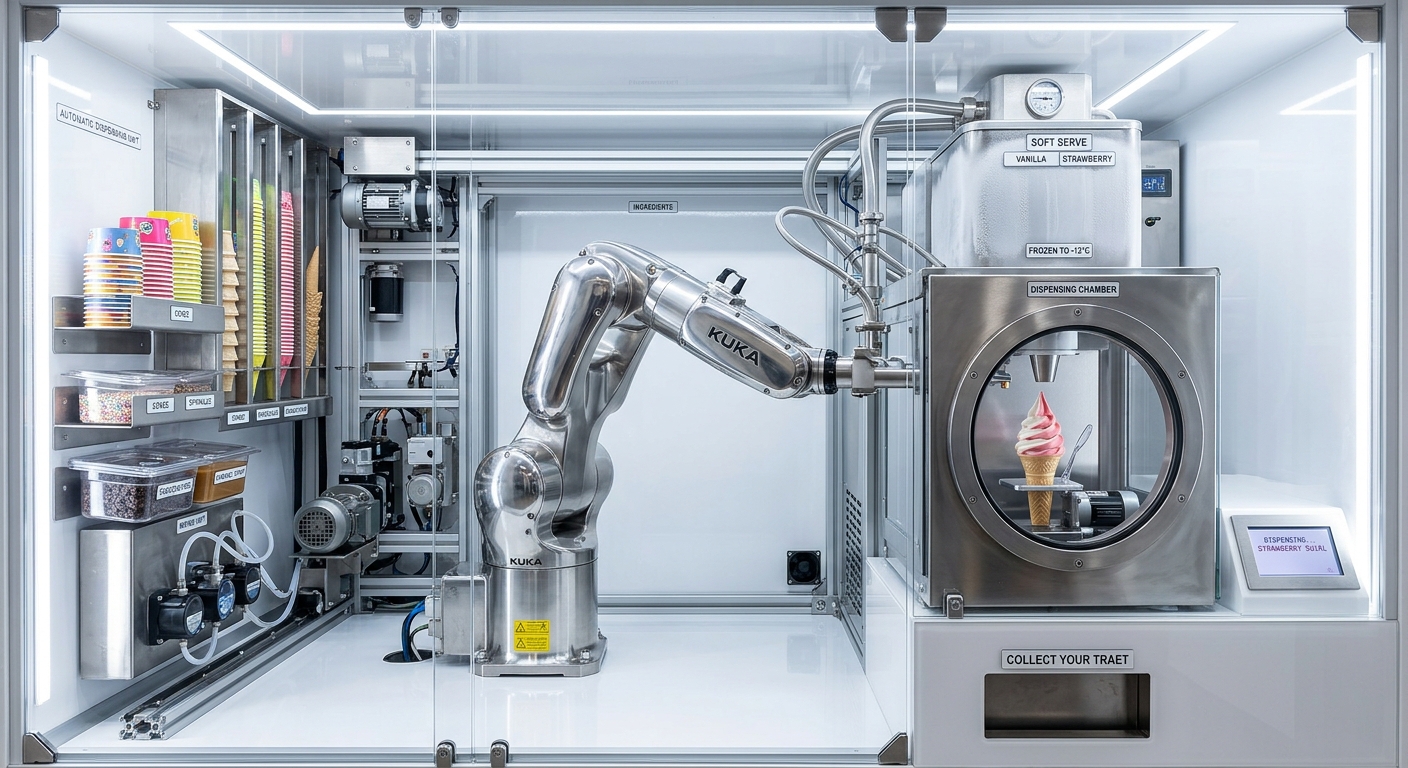
The cheapest robotic machines often use weaker arms, slower dispensing systems, and less reliable refrigeration. In a high-traffic venue, downtime costs more than the savings.
If your venue is international, the machine needs to accept cards, mobile wallets, QR pay, and ideally NFC. Our overview of contactless payment integration covers the basics.
A machine in a mall basement parking corridor sells well but is a nightmare to restock during business hours. Plan the operations route before signing the lease.
Modern robotic machines stream sales, inventory, and error data to a dashboard. Operators who actually use this data optimize flavors, pricing, and restocking frequency — and out-earn those who don’t by 20–30%.
Robotic ice cream vending machines win in malls and amusement parks because they convert spectacle into sales, eliminate labor, fit into small footprints, and run reliably during the exact hours when staffed alternatives struggle. They’re not magic — bad placement still kills ROI — but in the right spot, they consistently outperform traditional dessert formats on revenue per square meter.
If you’re evaluating a unit for a specific venue, the smart move is to start with the location data: foot traffic patterns, dwell time, nearby attractions, and competing F&B options. From there, machine spec and customization fall into place. Spiritvend Tech builds robotic ice cream vending machines designed specifically for high-traffic commercial environments, with OEM customization and global support. Get in touch with our team to discuss what fits your venue — we’ll help you size the right machine before you commit.

Why Robotic Ice Cream Vending Machines Are Winning in Malls and Amusement Parks

Top 10 High-Traffic Locations Where Automatic Vending Machines Generate the Most Revenue

Vending Industry Market Size Trends Technology and Growth Strategies in 2026

Facts About Vending Machines That Explain How They Work Today

From Coin Operated to Smart Popcorn Vending Machines Shaping Snack Retail

The Future of Vending Machines: Key Tech Trends Shaping 2025
Notification