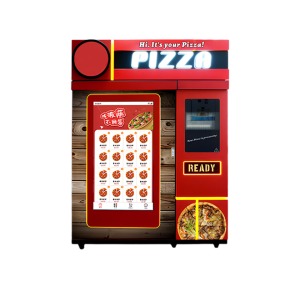
For most high-traffic, unattended-friendly locations, pizza vending machines win decisively on labor and operating margin — typically cutting labor costs from 30% of revenue down to single digits, while running 24/7 with one part-time restocker. Traditional kiosks still beat vending on menu range, fresh-dough showmanship, and average ticket size. The right choice depends less on which is “better” and more on your location, staffing reality, and how many service hours you actually need to cover.
A traditional pizza kiosk needs at least two people on the floor — one prepping, one at the counter. Even on a slow Tuesday afternoon, that’s roughly $35–$50/hour in fully-loaded labor walking out the door whether you sell 5 pizzas or 50.
An automatic pizza vending machine flips that math. It bakes, holds, and dispenses a pizza in 2.5–4 minutes with zero staff present. Your only labor cost is a restocking visit — usually 20–40 minutes, once a day. That’s the entire reason this category exists: it converts fixed labor cost into variable cost on ingredients only.
The practical impact? A kiosk needs to sell roughly 60–80 pizzas a day just to cover labor. A vending unit hits break-even on labor at fewer than 10 pizzas a day. Everything beyond that flows to margin.
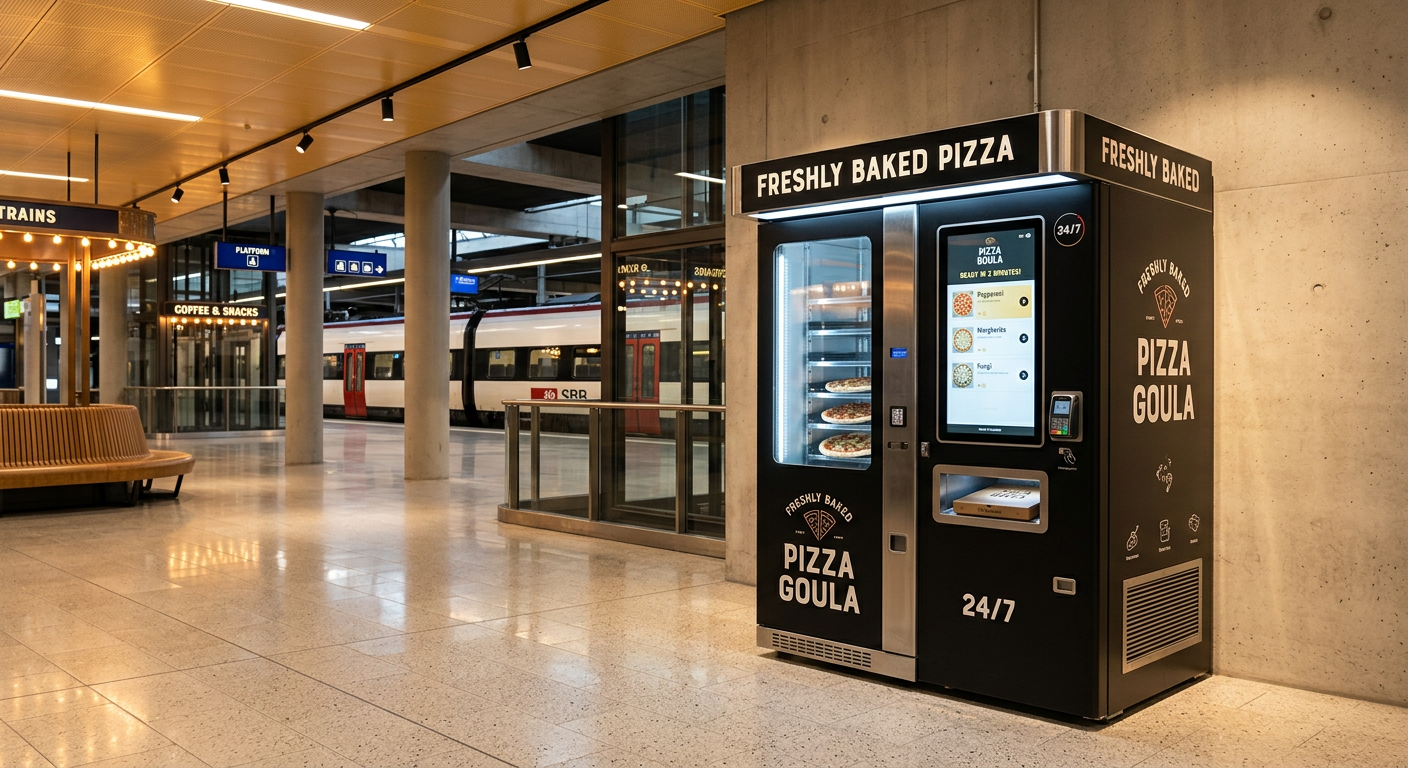
Here’s the head-to-head on the metrics buyers ask about most when evaluating a pizza vending business:
| Criteria | Pizza Vending Machine | Traditional Pizza Kiosk |
|---|---|---|
| Daily labor required | ~30 min restocking | 2–4 staff per shift |
| Operating hours | 24/7 unattended | 8–14 hrs staffed |
| Startup investment | $20K–$45K per unit | $80K–$250K buildout |
| Footprint | 1.5–3 m² | 15–40 m² |
| Menu flexibility | 6–10 SKUs | Full custom menu |
| Cook time per pizza | 2.5–4 minutes | 8–15 minutes |
| Labor % of revenue | 3–8% | 28–35% |
| Best location fit | Airports, campuses, 24h zones | Food courts, plazas |
Notice how the kiosk wins on menu and customization, while the vending machine wins on every cost line. That tension is the entire decision.
A turnkey pizza kiosk buildout in a mid-tier mall — counter, ovens, refrigeration, hood, plumbing, signage, lease deposit — runs $80,000 to $250,000 before you sell a single slice. Add 60–120 days of permits and construction.
A pizza vending machine lands in the $20,000–$45,000 range depending on capacity, refrigeration system, and payment hardware. Installation is typically 1–2 days, and most units only need a power outlet plus optional water line.
Run the payback math at 40 pizzas a day at $8 average ticket: a $32K vending unit with a 60% gross margin recovers its hardware cost in roughly 5–7 months. A $150K kiosk with 22% net margin after labor and rent typically needs 18–30 months. For investors comparing models, this is also why some operators pair pizza units with adjacent categories — see our breakdown of cotton candy vending machine ROI for a parallel cost structure.
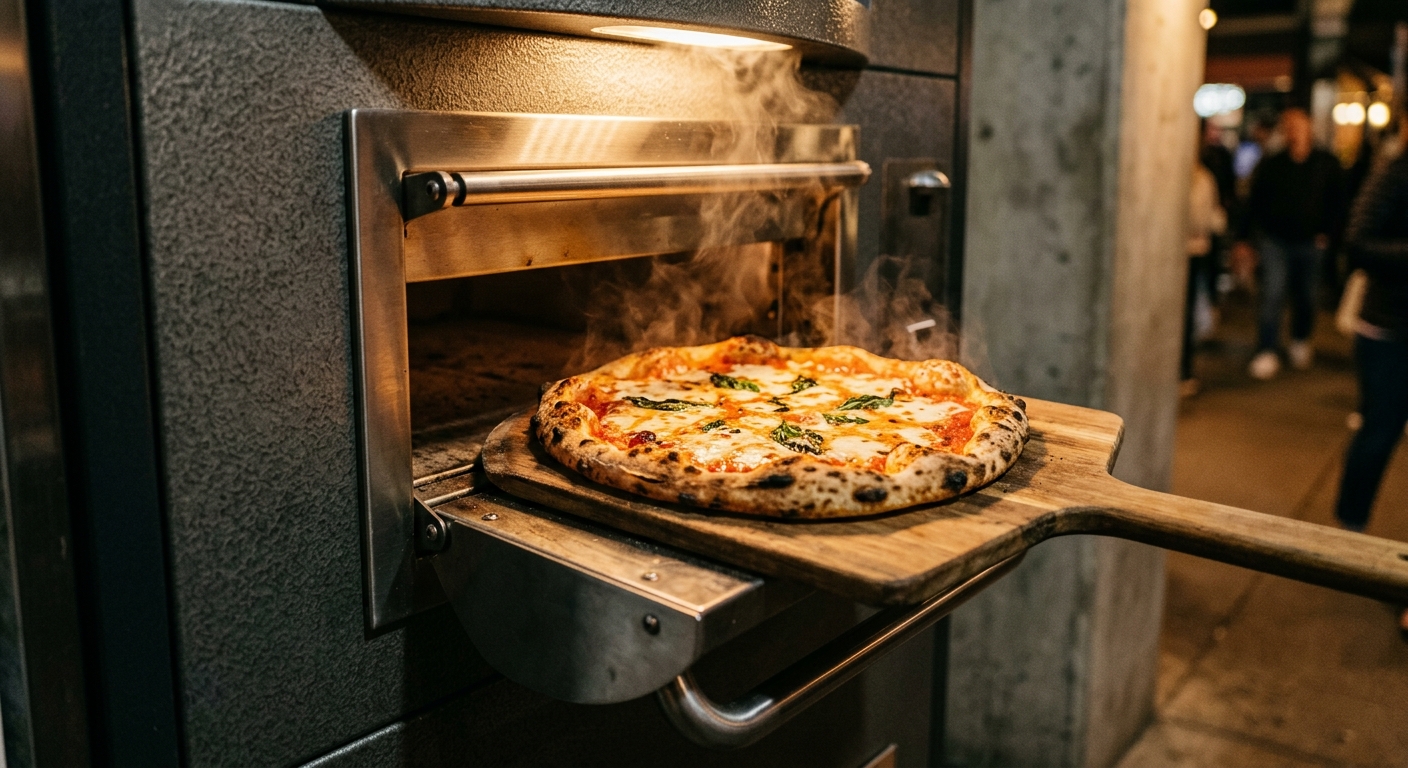
Vending machines aren’t the answer for every pizza concept. If your brand promise is hand-stretched Neapolitan dough with a wood-fired char, no automated unit will replicate that — and customers paying $18 a pie expect to see the show.
Kiosks also win when:
For instance, a family-owned pizzeria in a tourist plaza built around hand-tossing dough at the window would lose its entire identity behind a metal cabinet. Vending isn’t the move there.
The vending model wins decisively in three location patterns:
Hospitals, university dorms, transit hubs, factory break rooms, and casino floors all have demand at 2 AM that no kiosk operator will staff profitably. A vending unit covers those hours at zero incremental labor.
A pizza vending machine fits in a 2 m² alcove. Try negotiating a 30 m² food court lease in a Class A mall — the rent alone often kills the unit economics. For more on this trade-off, our guide to profitable vending machine locations goes deeper on placement strategy.
In 2026, food-service hiring is still painful in many markets. A unit that doesn’t need a schedule is structurally easier to scale.
For example, a university operator we’ve worked with deployed three pizza vending machines across two residence halls and a 24-hour study center. The setup replaced one previously-staffed late-night pizza window, eliminated $11,000/month in night-shift labor, and lifted late-night pizza sales by serving demand that simply wasn’t getting served before midnight.
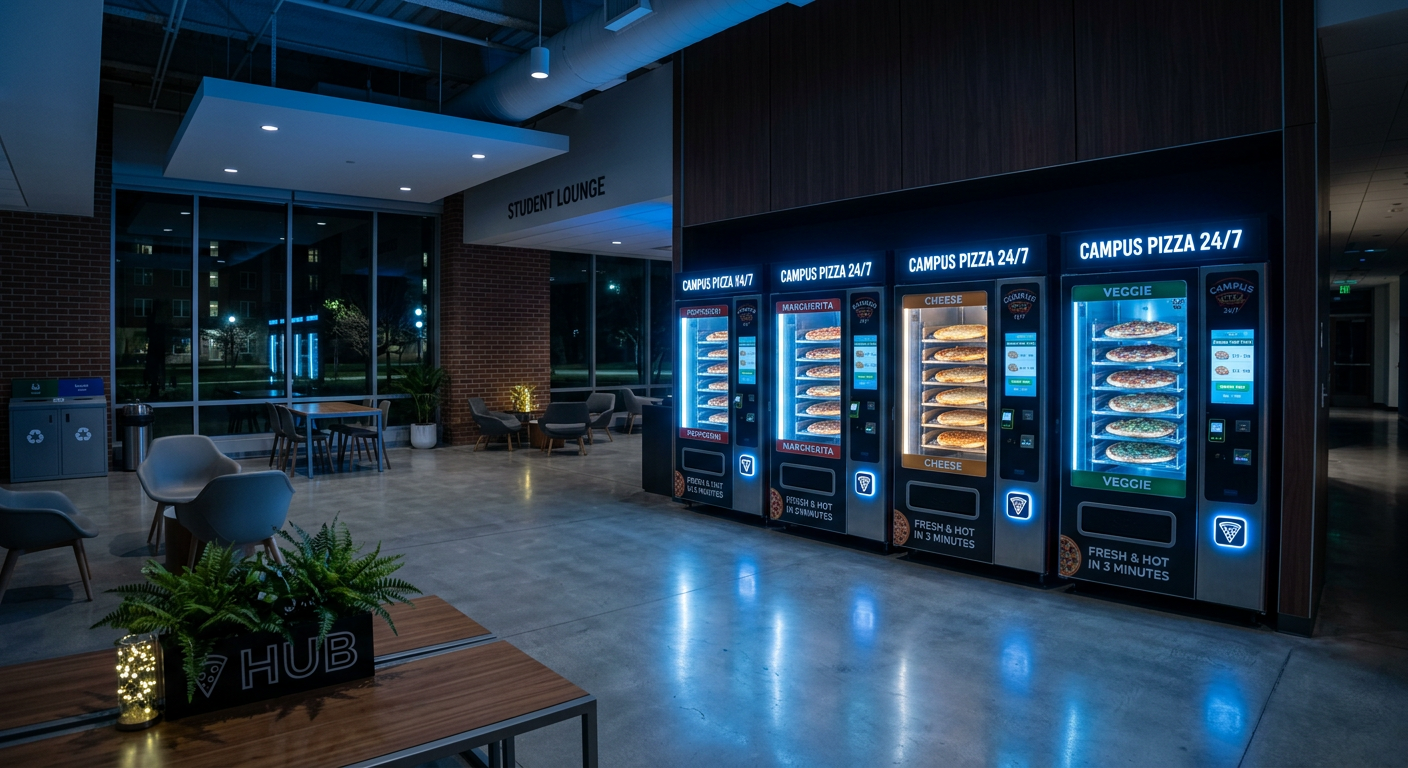
The old objection — “vending pizza tastes like cardboard” — is increasingly outdated. Modern units use refrigerated dough storage, infrared or convection baking, and sealed topping reservoirs. The result is a fresh-baked pizza, not a reheated frozen disc.
What still matters is ingredient sourcing. A vending machine cooks exactly what you load into it. Operators who use commercial-grade par-baked crusts, real mozzarella, and quality sauce get genuinely good product. Operators who cheap out on inputs get the cardboard reputation they deserve. The machine is a tool, not an excuse.
Pair this with the broader shift toward smart, connected vending — IoT-enabled inventory alerts, remote temperature monitoring, and predictive maintenance. We covered the technology stack in detail in our piece on IoT and AI in vending machines.
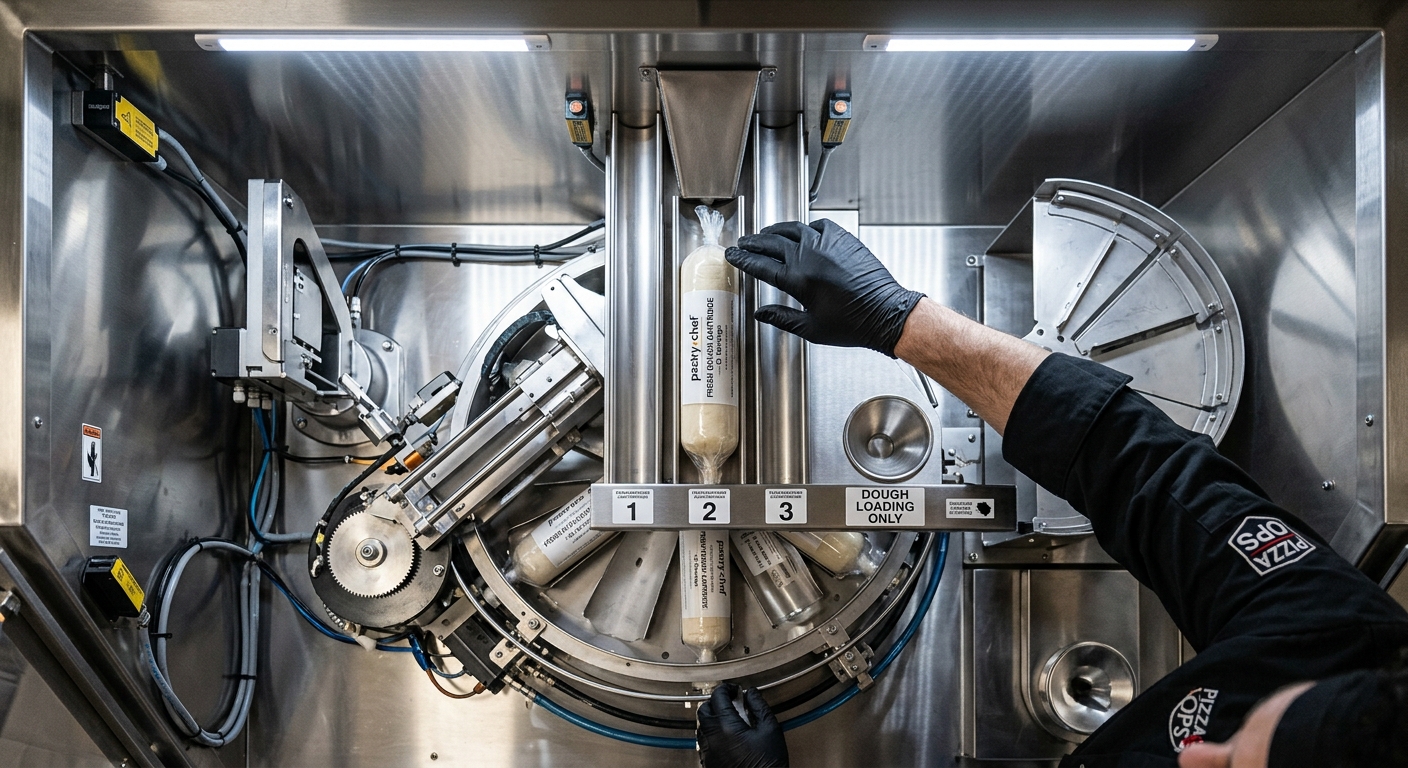
That’s it. The whole job description fits on a sticky note. One operator can realistically manage 4–6 pizza vending units on a single morning route — economics that simply don’t exist with kiosks. Maintenance is also predictable; see our pizza vending machine maintenance guide for the weekly and monthly checklist.
The most sophisticated operators in 2026 aren’t picking sides — they’re running both. A flagship kiosk anchors the brand in a high-visibility location with full menu and staff. Vending satellites extend that brand into hours and locations a kiosk can’t economically serve.
Think of it like a restaurant with a ghost-kitchen arm. The kiosk handles experience and average ticket. The vending fleet handles coverage and margin. Same brand, same recipes, two delivery formats.
This model is especially strong for regional chains looking to expand into high-traffic locations without the capital and staffing burden of new full-format builds.
Skip the deliberation. Ask these five questions:
Score 3+ in either column and you have your answer. Score split? Run a vending pilot first — the capital risk is a fraction of a kiosk buildout, and the data you collect will inform any future kiosk decision.
Pizza vending machines win on labor cost, uptime, footprint, and payback speed. Traditional kiosks win on menu range, ticket size, and brand experience. The decision isn’t about which technology is “better” — it’s about matching the format to the location, the hours, and the kind of business you actually want to operate.
For most unattended-friendly sites — airports, campuses, hospitals, transit hubs, 24-hour entertainment zones — the math is hard to argue with. Lower capex, lower labor, faster payback, and a footprint that fits where kiosks can’t go.
If you’re weighing a pizza vending deployment and want a straight answer on machine specs, customization options, and OEM pricing for your market, get in touch with our team — we’ll walk through your location and volume assumptions before you commit to anything.

Pizza Vending Machines vs. Traditional Kiosks: Which One Wins on Labor and Profit?

Cotton Candy Vending Machine ROI: Cost, Margins, and Payback Period Explained

Are Vending Machines Profitable? A Complete Profit Guide
Explore the Fun Features of SpiritVendTech’s Vending Machines

Creative Marketing Ideas for Promoting Ice Cream Vending Machines

Pizza Vending Machines: Revolutionizing Fast Food
Notification