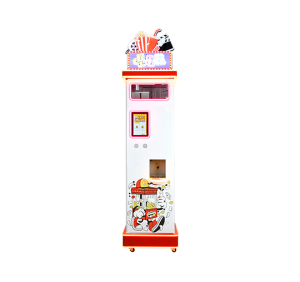
A commercial-grade cotton candy vending machine typically costs between $4,500 and $9,500, sells each freshly spun stick for $3–$6 against an ingredient cost of roughly $0.20–$0.30, and pays back the initial investment in 6 to 14 months at a moderately busy location. The math is appealing because sugar is cheap, the product is theatrical, and the machine runs unattended. The catch — and where most ROI projections fall apart — is foot traffic, electricity, location rent, and how disciplined you are about restocking and pricing.
Forget the $1,500 plastic units you see on consumer marketplaces — those are party rentals, not vending machines. A real commercial automatic cotton candy vending machine sits in three price brackets:
Beyond the machine itself, budget another $400–$900 for shipping (sea freight from China to most ports), $150–$300 for installation and Wi-Fi setup, and $200–$500 in your first sugar and stick inventory. A realistic all-in landed cost for a mid-range unit is around $7,000–$8,500.
If you want a deeper look at what separates a serious commercial unit from a hobby machine, the commercial candy floss machine guide walks through the build specs that matter.
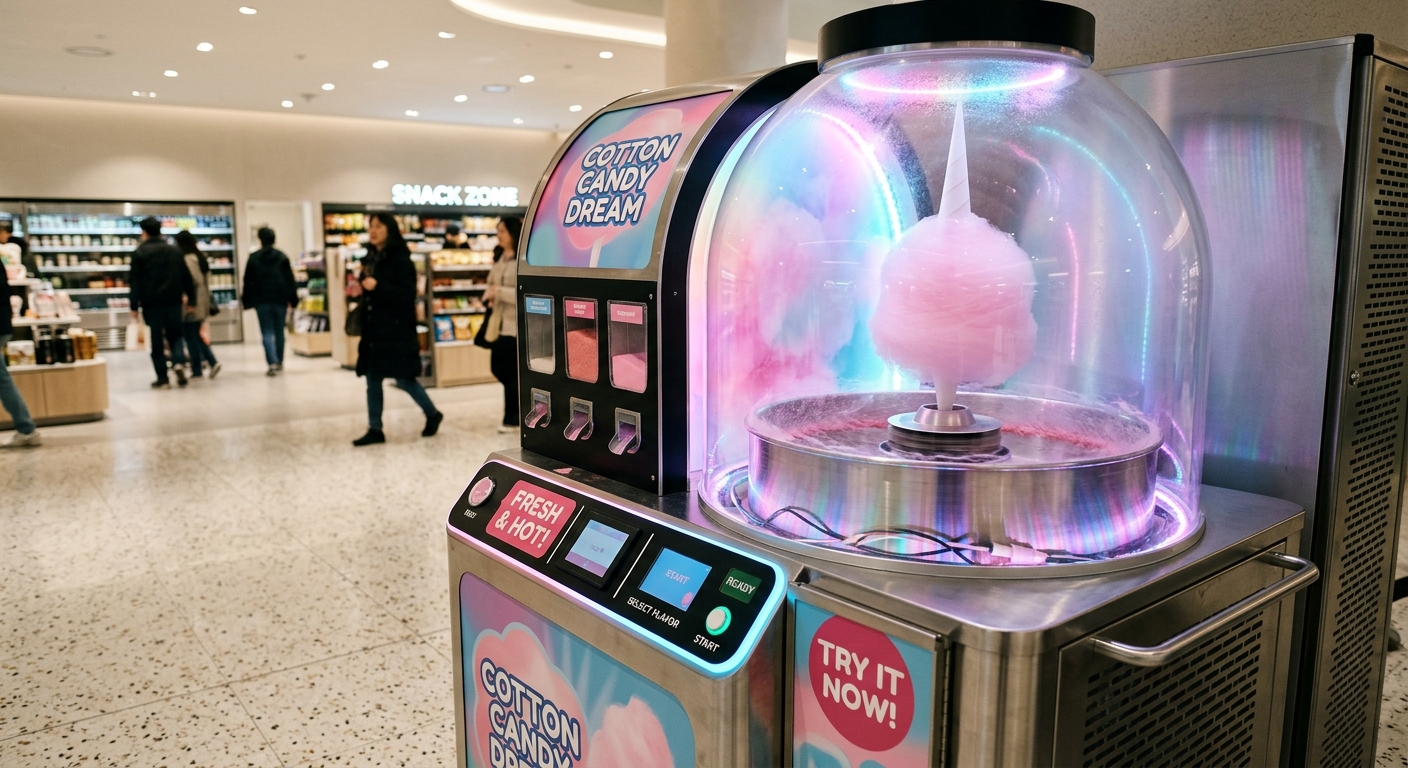
Sugar costs almost nothing. That’s the whole secret.
A 1 kg bag of flavored vending sugar costs roughly $3–$5 and produces 50–60 sticks of cotton candy. That puts raw sugar cost at $0.06–$0.10 per stick. Add the paper cone or plastic stick ($0.08–$0.15) and an optional packaging bag ($0.05–$0.10), and your total cost of goods sold lands at $0.20–$0.35 per stick.
Sell that stick for $4 and you’re looking at a gross margin of roughly 92%. Sell it for $5 at an amusement park and the margin pushes 95%. There aren’t many food vending categories that compete with this — popcorn comes close, smoothies don’t, pizza definitely doesn’t.
One caveat: those margins are gross. They don’t yet account for electricity, location fees, payment processing, or restocking labor. We’ll get to those.
Here’s where rosy spreadsheets meet reality. The five line items that eat into your gross margin:
A cotton candy vending machine draws 1.0–1.5 kW while spinning, but only ~150 W on standby. At an average US/EU commercial electricity rate of $0.15/kWh and 30 sticks/day, expect $25–$45/month in power.
Mall and cinema operators typically want either flat rent ($200–$600/month) or a revenue share (15–25%). Amusement parks often demand 25–35%. This single line item is the biggest variable in your ROI model.
Card and mobile payment fees run 2.5–3.5%. On a $4 stick, that’s about $0.10–$0.14.
Even ‘unattended’ machines need someone to refill sugar, sticks, and cleaning cloths once or twice a week. Allow 30 minutes per visit. If you operate the machine yourself, this is sweat equity; if you hire, budget $40–$80/month per machine.
Heating element replacement, spinner head cleaning, and the occasional motor service. Allow ~$200–$400/year. Following a structured vending machine maintenance routine dramatically reduces unexpected downtime.
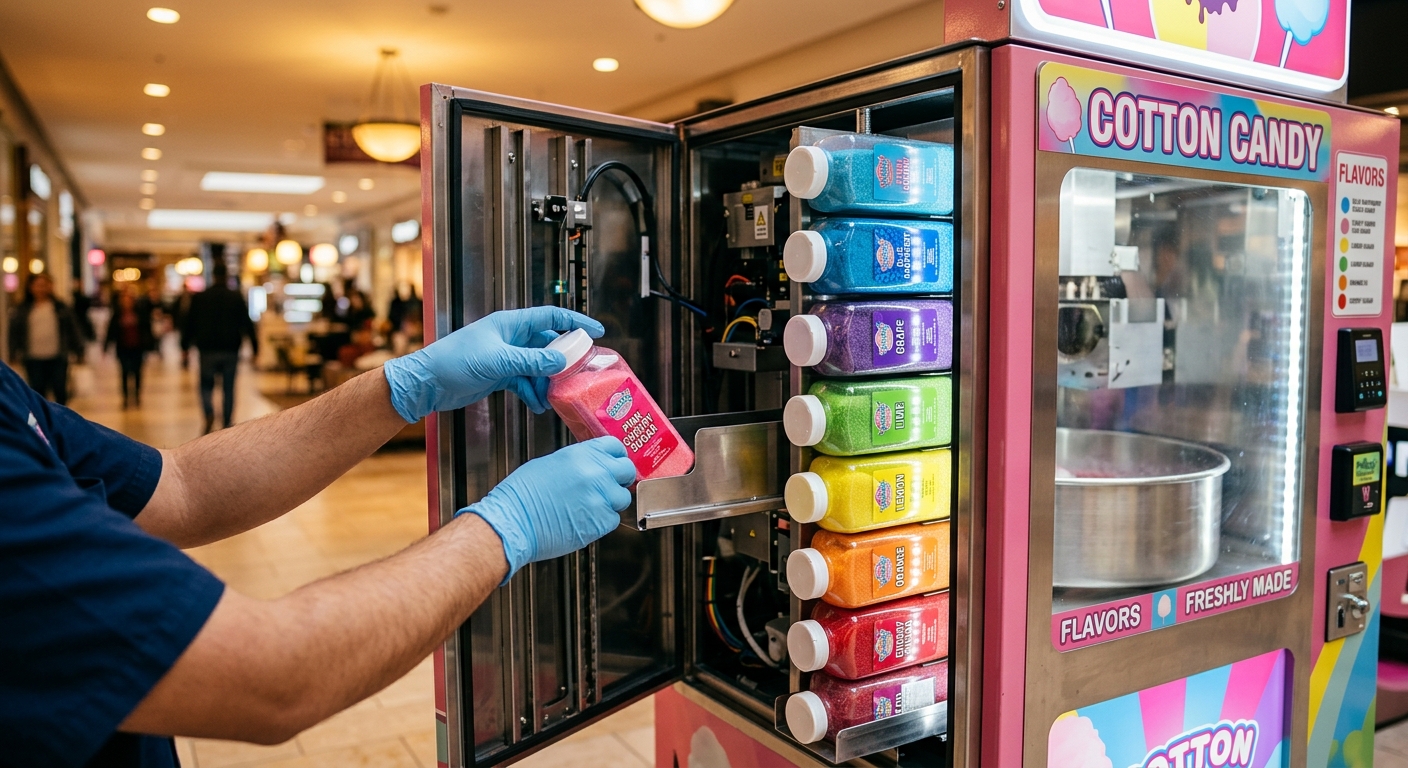
Payback period = (machine + setup cost) ÷ monthly net profit. The honest answer ranges from 3 months to 18 months depending almost entirely on where the machine sits.
For instance, an operator who placed a $7,200 unit inside a regional amusement park reported about 130 sticks/day during weekends and 60/day on weekdays at $5 retail. After 30% revenue share and other operating costs, net profit landed around $9,000–$11,000/month — paying back the machine in roughly four months and entering pure profit territory by month five.
Contrast that with the same machine in a suburban karaoke bar averaging 18 sticks/day at $3.50. Net profit dropped to around $1,200/month, stretching payback to 14–16 months. Same machine, very different business.
The takeaway: the machine almost never determines your ROI. The location does. This is why we spend so much time helping buyers think through where to place vending machines before they buy.
Most new operators price too low. They worry $5 sounds expensive for “just sugar.” But cotton candy isn’t competing with snacks — it’s competing with experiences. A churro at a theme park costs $7. A balloon costs $12. A stick of freshly spun, shape-molded cotton candy at $5–$6? Bargain.
A few pricing principles that consistently work:
A $1 price increase on a $4 product is a 25% revenue lift with zero added cost. That alone can shorten payback by 2–4 months.

One profitable machine teaches you the business. Three machines turn it into a real income stream.
The economics improve as you scale because fixed costs (your time, your supplier relationships, your maintenance learning curve) spread across more units. A single operator can comfortably manage 4–6 cotton candy machines within a 30-minute driving radius, restocking twice weekly, generating a combined net income that single-machine math can’t reach.
The trap to avoid: don’t scale before your first machine has been profitable for at least 90 days at the target location. You need data — not optimism — to pick site #2. Operators who skip this step often replicate a bad location three times before realizing the original numbers were the problem.
For a broader framework on building out a route, see our deeper write-up on maximizing profits with a cotton candy commercial setup.
Let’s run honest numbers for a mid-tier scenario: $7,500 all-in machine cost, placed in a mid-sized shopping mall food court.
Payback period: $7,500 ÷ $4,670 ≈ 1.6 months. That’s the upper end of optimistic — most real operations land at 6–10 months in similar settings because daily volume varies, and the first 2–3 months are a learning curve where sales are typically 40–60% of stabilized volume.
Run the same math at 25 sticks/day instead of 50 and payback stretches to about 5 months. Run it at 10 sticks/day and you’re past 14 months. Volume is everything.
Three killers, in order of how often we see them sink operators:
Low-traffic offices, residential lobbies, and quiet retail strips look cheap to rent but generate 5–15 sticks/day. Walk away from any location where you can’t observe at least 500+ pedestrians per day during target hours before signing.
Cotton candy hates humidity. Above 70% RH, sugar absorbs moisture, clumps in the dispenser, and the finished product wilts within minutes. Outdoor placements in tropical climates need climate-controlled enclosures or covered locations — otherwise customer complaints and refunds destroy margins.
An empty machine earns nothing and trains customers to walk past. Set restocking thresholds at 25% sugar remaining, not 5%. Use models with remote monitoring so you get alerts before you run dry.
For a comparison of dumb vs. connected machines and why remote monitoring matters at scale, see smart vs. traditional vending machines.
Before ordering a machine, build a simple worksheet with these inputs and find out whether your specific deal makes sense:
If the worksheet shows payback under 12 months with conservative assumptions, you have a strong deal. Over 18 months? Renegotiate the location terms or find a better spot before you commit capital.
Want help running the numbers for your specific venue, or curious about OEM options, custom shapes, and multi-flavor configurations? Reach out to the Spiritvend Tech team — we’ll send spec sheets, pricing, and honest projections based on your traffic and location type, not generic brochure promises. You can also browse our broader lineup of popular vending snack machines if you’re considering more than one product category.

Pizza Vending Machines vs. Traditional Kiosks: Which One Wins on Labor and Profit?

Cotton Candy Vending Machine ROI: Cost, Margins, and Payback Period Explained

Are Vending Machines Profitable? A Complete Profit Guide
Explore the Fun Features of SpiritVendTech’s Vending Machines

Creative Marketing Ideas for Promoting Ice Cream Vending Machines

Pizza Vending Machines: Revolutionizing Fast Food
Notification