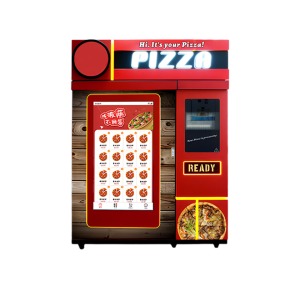
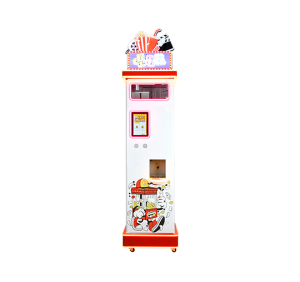
The vending industry has evolved far beyond traditional snack and soda machines. Today, it represents a rapidly transforming global retail ecosystem driven by automation, digital payments, smart technology, and changing consumer preferences. From offices and hospitals to transportation hubs and smart cities, vending machines are becoming a critical component of modern, unattended retail.
This in-depth guide explores the vending industry from a strategic and commercial perspective—covering market size, consumer trends, technological innovation, and actionable growth strategies for operators, manufacturers, and investors.
The global vending industry is valued at tens of billions of dollars annually and continues to grow steadily. Market analysts project the industry to approach or exceed USD 100 billion within the next decade, supported by consistent demand across food, beverage, and non-food categories.
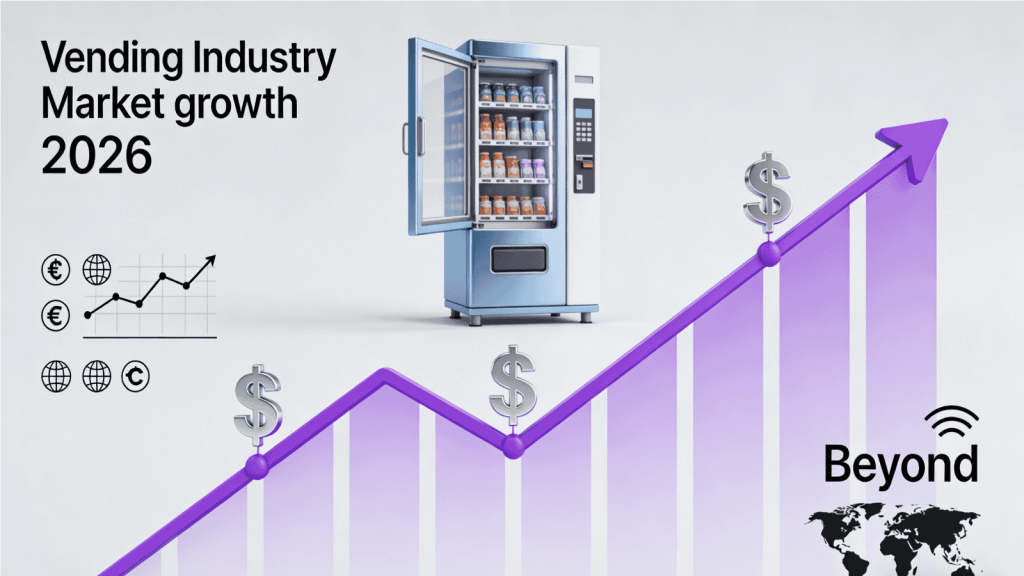
Growth is fueled by:
Unlike many retail formats, vending offers low labor dependency, predictable operating costs, and scalable deployment—making it attractive even during economic uncertainty.
Each region presents different product preferences, payment standards, and regulatory requirements—making localization a key success factor.
The modern vending industry includes multiple high-growth segments:
This diversification allows operators to target niche demand while increasing revenue per machine.
Health-conscious consumers are reshaping vending product selection. Demand for:
is growing faster than traditional snack categories. Healthy vending machines are now common in workplaces, hospitals, gyms, and educational institutions.
Operators that adapt product assortments to wellness trends consistently outperform those relying on legacy snack-only models.
Cashless payment is no longer a premium feature—it is an expectation.
Modern vending machines increasingly support:
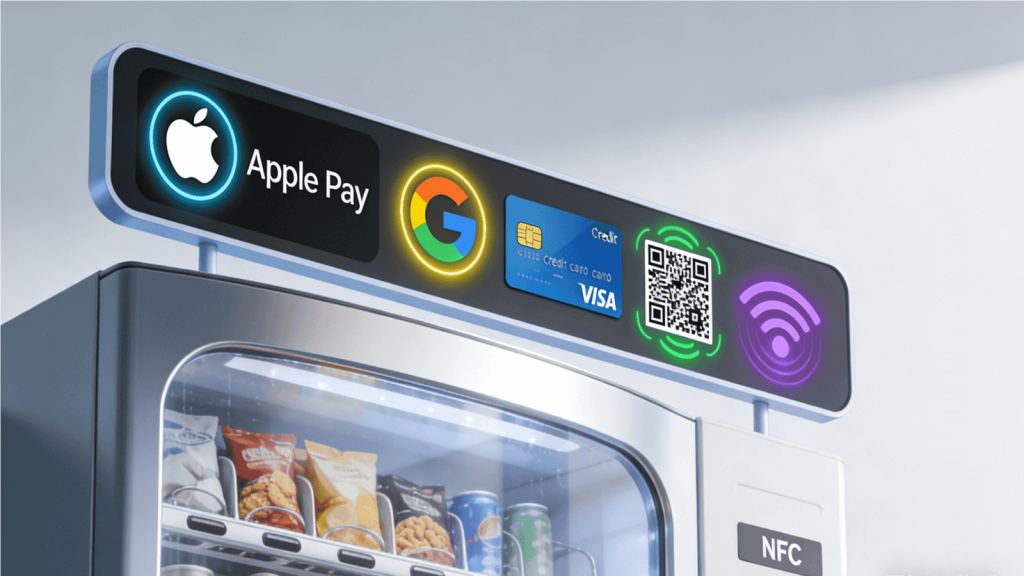
Cashless transactions not only improve user convenience but also increase average transaction value, reduce theft, and enable data-driven sales analysis.
Post-pandemic consumer behavior accelerated demand for:
Vending machines align perfectly with these expectations, positioning the industry as a long-term beneficiary of changing retail habits.
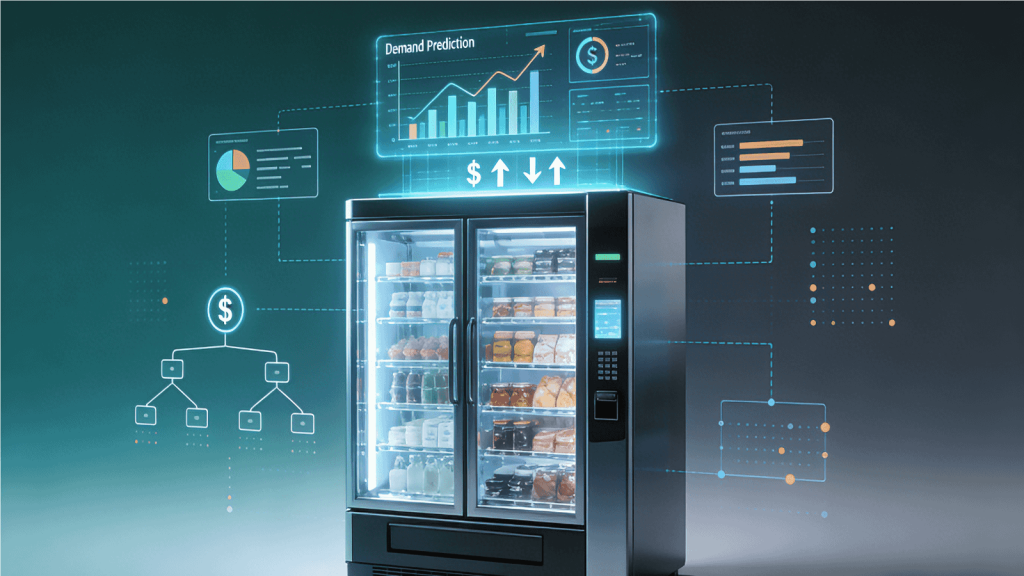
Smart vending machines equipped with IoT technology allow operators to:
Data-driven operations significantly improve profitability and scalability across vending networks.
AI is increasingly used to:
These capabilities transform vending machines from passive dispensers into intelligent retail endpoints.
Large touchscreens, digital signage, and interactive interfaces enhance engagement and upselling opportunities. Some machines integrate loyalty programs, promotions, and targeted advertising—creating additional revenue streams beyond product sales.
High-performing vending operations prioritize:
Matching product selection to location demographics is essential for maximizing machine profitability.
Successful operators expand beyond low-margin snacks by offering:
Diversification reduces risk and increases revenue per square foot.
Using cloud-based vending management systems enables:
Operational transparency builds trust with property owners and partners.
Modern vending customers value brands that emphasize:
Sustainability is no longer optional—it is a competitive differentiator.
The vending industry ecosystem includes:
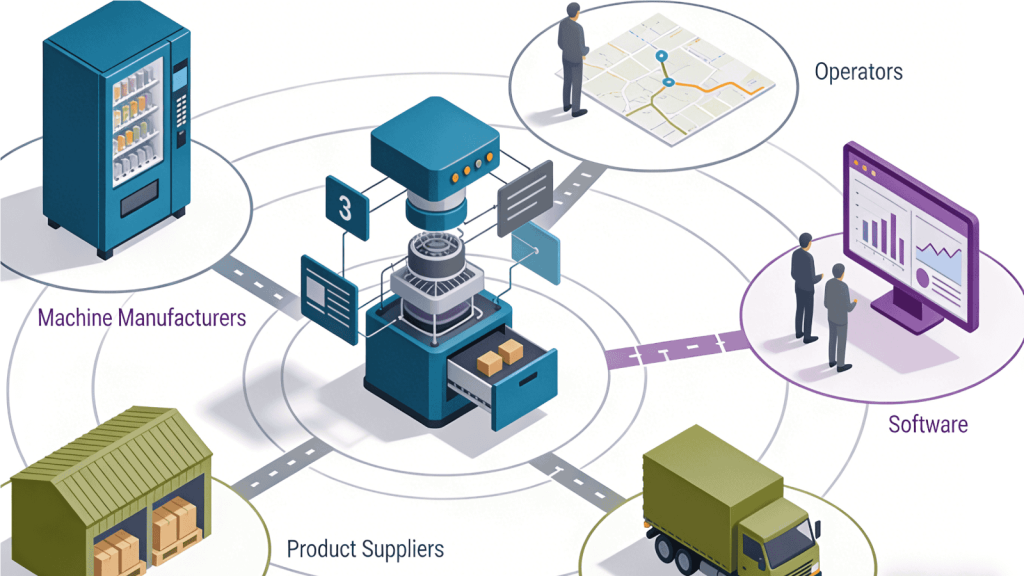
Technology-enabled operators with strong data capabilities are gaining market share over traditional, manual operations.
Key growth opportunities include:
These segments offer higher margins and long-term scalability.
The vending industry is transitioning from a convenience-based retail model to a technology-driven, data-centric retail infrastructure. Over the next decade, success will depend on:
Companies that invest early in intelligent vending solutions and localized strategies will lead the next generation of unattended retail.
The vending industry is no longer defined by machines—it is defined by systems, data, and experience. As consumer expectations continue to evolve, vending operators and solution providers must adapt through innovation, technology, and strategic positioning.
For businesses willing to modernize, the vending industry offers stable growth, scalable operations, and long-term relevance in the global retail landscape.

Why Robotic Ice Cream Vending Machines Are Winning in Malls and Amusement Parks

Top 10 High-Traffic Locations Where Automatic Vending Machines Generate the Most Revenue

Vending Industry Market Size Trends Technology and Growth Strategies in 2026

Facts About Vending Machines That Explain How They Work Today

From Coin Operated to Smart Popcorn Vending Machines Shaping Snack Retail

The Future of Vending Machines: Key Tech Trends Shaping 2025
Notification